
Ratings & reviews
Editorial score
Community score
Be the first
Organoleptic profile
Strength
medium
Balance
good
Draw
slightly tight
Intensity
expressive
- Bouquet
- complex
- Finish
- medium
- Ash color
- gray
- Smoke output
- medium
Aroma profile
Dominant aromas
Secondary aromas
Similar cigars
Based on strength, aromas, format and wrapper origin — for a comparable tasting experience.
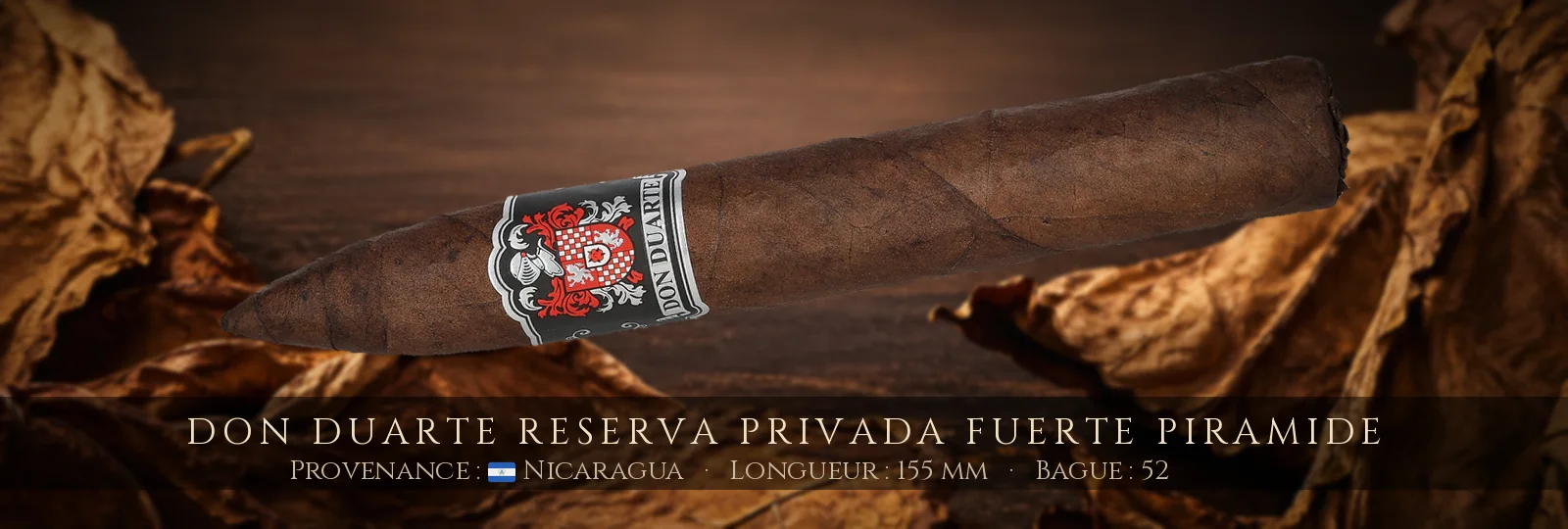 87% match
Don Duarte
Don Duarte Reserva Privada Fuerte Piramide7 – 11 €
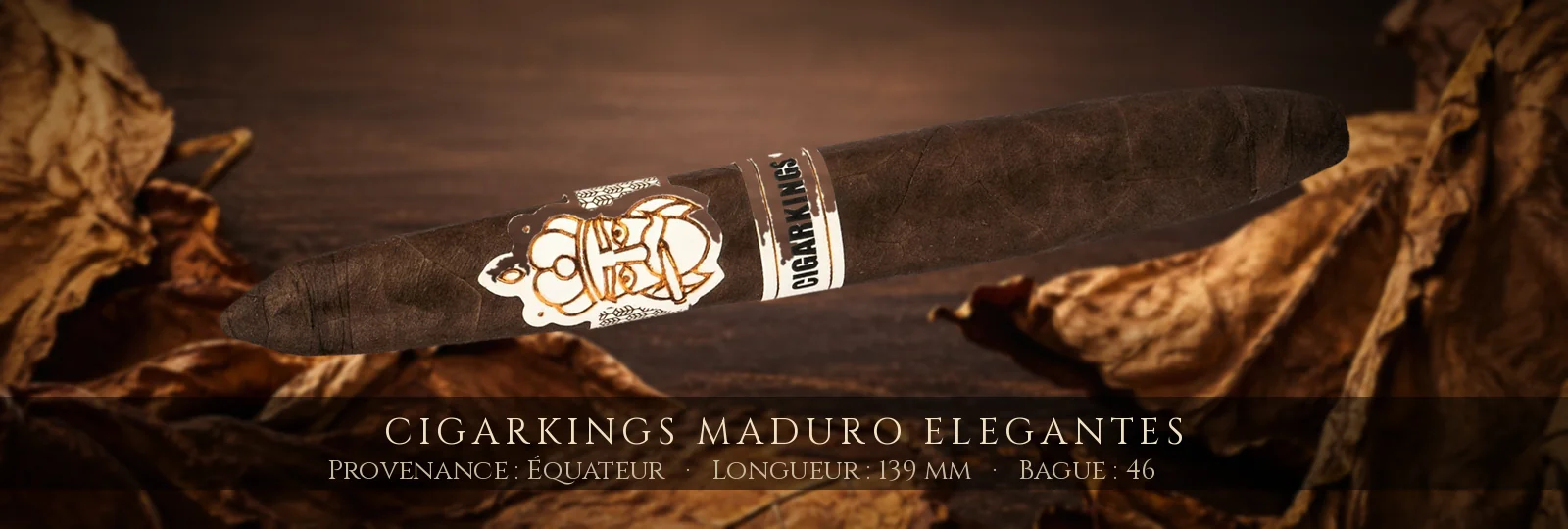 80% match
Cigarkings
Cigarkings Maduro Elegantes8 – 12 €
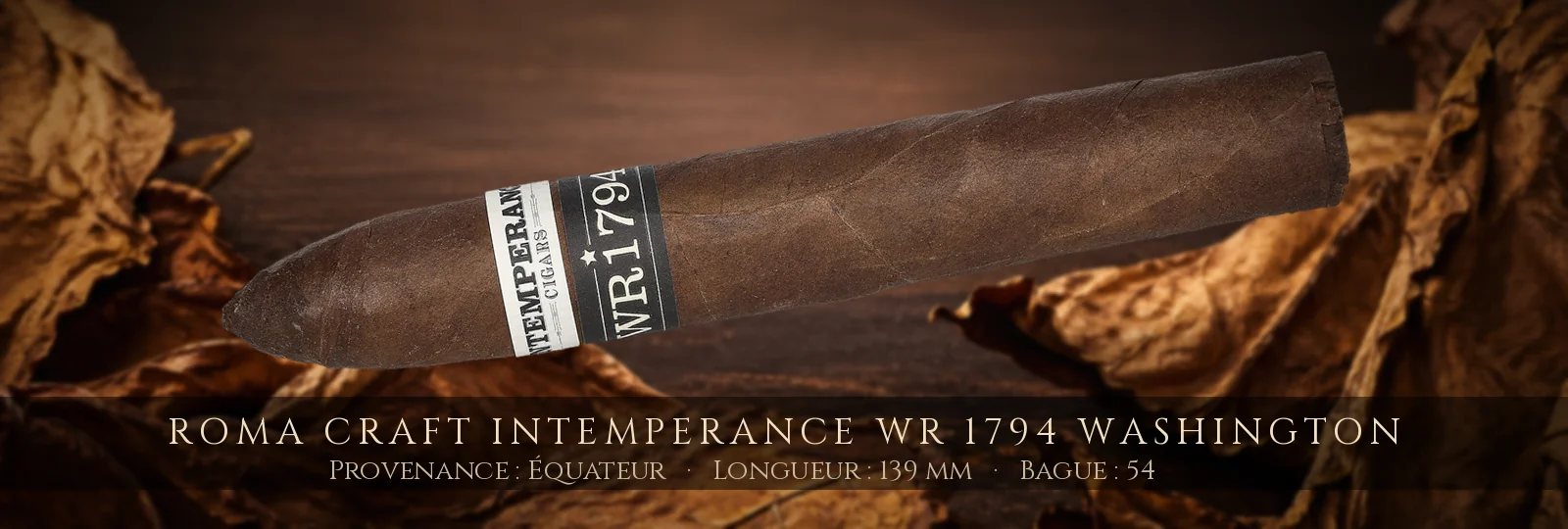 80% match
RoMa Craft
RoMa Craft Intemperance WR 1794 Washington9 – 14 €
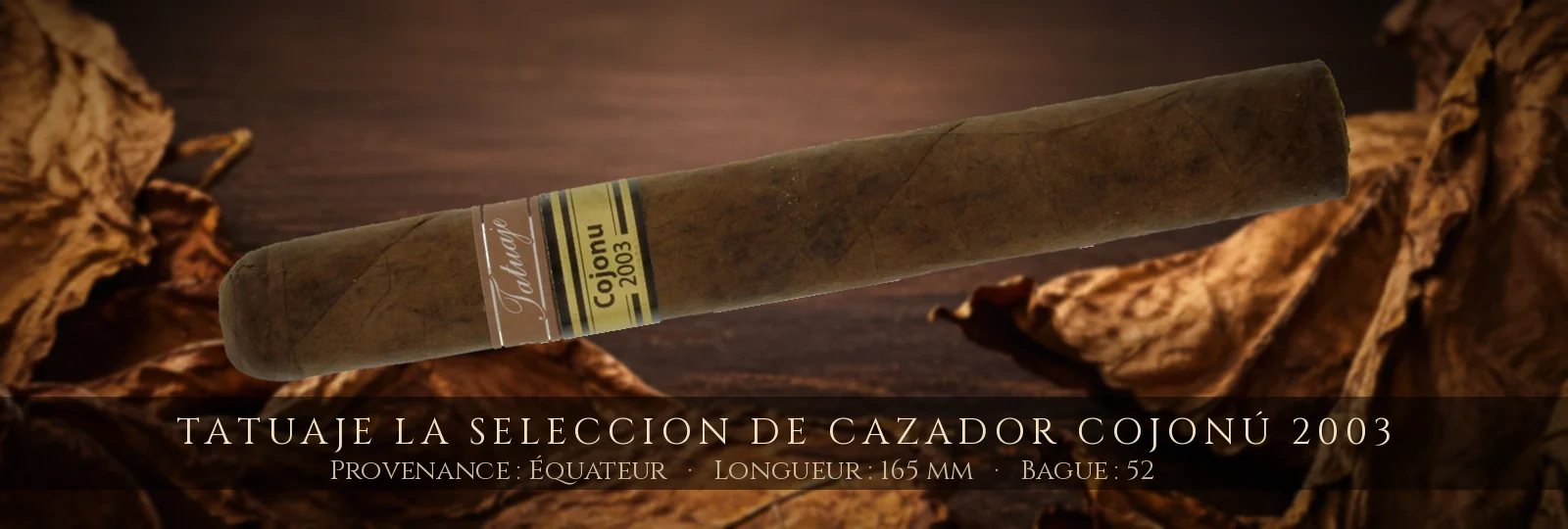 79% match
Tatuaje
Tatuaje La Seleccion de Cazador Cojonú 200312 – 20 €
Tasting notes
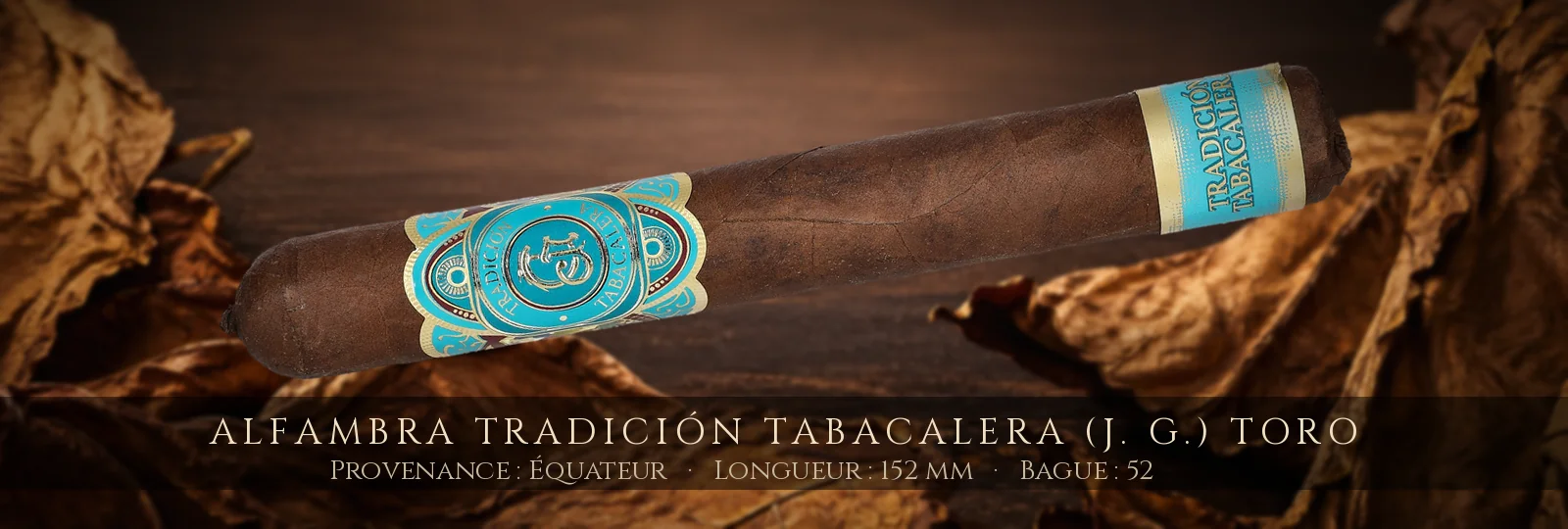
The Alfambra Tradición Tabacalera (J. G.) Toro is a visual masterpiece with its Ecuadorian wrapper and turquoise and gold bands. Its length of 152.4 mm (6") and diameter of 20.6 mm (¾") give this vitola an alluring presence. The wrapper, while beautifully colored, exhibits some minor irregularities, attesting to a certain authenticity.
Upon the first approach, the pre-light aromas evoke sensations of earth and dark chocolate, while lighting it releases the rich aroma of roasted coffee, accentuated by subtle hints of marzipan. These initial aromas prepare your senses for a deeper exploration, although a slightly difficult draw is worth noting.
On the palate, complexity unfolds across the three thirds. The flavors remain well-presented without veering into excess intensity, ranging from robust earthy notes to softer nuances of marzipan. These aromas are subtly supported by a hint of pepper that adds a spicy character while maintaining a certain sweetness, especially in the final third.
In the end, an earthy sensation, with a slight sweetness, lingers on the palate, crowning the experience. The balance between strength and sweetness is intriguing, although one might desire a bit more depth to fully justify the price. This cigar is not just a moment of tasting; it is a true sensory encounter.
To fully appreciate the Alfambra Tradición Tabacalera (J. G.) Toro, consider a tasting at dusk with a black coffee as an accompaniment. This intimate and peaceful moment seems perfectly aligned with the varied aromas and moderate strength of this Ecuadorian cigar, enriched by the sophistication of the Cuban tobaccos it contains.
Community impressions
Enthusiasts of this cigar highlight its alluring appearance and interesting aromatic bouquet. However, some lament an intensity of flavors that does not always meet expectations, pointing out a draw that can sometimes be difficult and an uneven construction. Despite these criticisms, the richness of earth and dark chocolate suggests a potential waiting to be discovered.
How to taste: Alfambra Tradición Tabacalera (J. G.) Toro
▼
1.Visual Examination
The Alfambra Tradición Tabacalera (J. G.) Toro features a natural wrapper, light brown to golden, offering a silky touch. Its construction is mediocre, and its Toro format, measuring 152.4 mm (6") with a ring gauge of 52, catches the eye with its generous dimensions.
This visual step allows for an appreciation of the quality of the materials used and anticipates the performance of the cigar. A good presentation is often a sign of a pleasant tasting experience.
2.Pre-light Aromas
Before lighting the cigar, inhaling the pre-light aromas reveals notes of damp earth, chocolate, and coffee. These rich and varied scents provide a glimpse into the complexity that awaits the smoker.
The pre-light aromas are essential for familiarizing oneself with the raw character of the tobacco. They prepare the palate for the tasting by sharpening attention on the forthcoming flavors.
3.The Cut
A standard straight cut is made just below the cap of the cigar, allowing optimal access to its draw. This method ensures a sufficient opening while preserving the integrity of the wrapper.
A precise cut is crucial to ensure a consistent draw. Poor technique can lead to draw difficulties and affect the overall experience.
4.Cold Draw
The cold draw proves to be somewhat difficult, possibly indicating excessive compaction of the tobacco. This key step allows for the detection of potential issues before lighting.
An adequate draw is fundamental to guarantee an even burn. A blocked draw may require a re-cut, thus avoiding discomfort during the tasting.
5.Lighting
The lighting of the cigar is performed with care, ensuring that the foot is well toasted. This attention helps prevent any irregular combustion.
An even lighting is essential for a harmonious smoking experience. It prevents issues such as canoeing that could detract from the tasting.
6.First Third
From the first puffs, the medium strength of the cigar is felt. The dominant aromas of damp earth, chocolate, and coffee emerge, accompanied by a medium volume of smoke.
The first third is often the most powerful and reveals the fundamental characteristics of the blend. Smoking slowly is advised to fully enjoy this aromatic explosion.
7.Second Third
As the cigar progresses, secondary aromas of almond, pepper, and saline notes begin to appear, enriching the experience. The balance is good, offering harmony between the flavors.
This third is crucial for appreciating the evolution of the aromas and the complexity of the blend. Observing this transition helps to better understand the subtleties of the cigar.
8.The Finish
At the end of the tasting, the gray ash testifies to the quality of the tobacco, and the lingering earthy residue with a slight sweetness extends in the mouth with a medium finish.
The finish reflects the constitutive elements of the cigar, confirming the quality of the leaves and the art of craftsmanship. A good finish often indicates a well-balanced cigar.
Community tasting notes
Have you smoked this cigar?
Be the first to share your tasting. Your review helps thousands of enthusiasts make the right choice.
✍️ Write a tasting note