
Tasting guide
How to taste a cigar: the complete guide
Tasting a cigar means taking the time to look, smell and note what you feel, from the first glance at the wrapper to the last puff. This guide follows the method used by the Cigares.com community: six simple steps, a clear vocabulary and a score out of 100 to compare your cigars over time.
Free printable PDF · 7 pages: guide, aroma wheel, 4 tasting sheets
The 6 steps of a cigar tasting
1. Identify the cigar and the context
Before lighting up, note what will let you find and compare your tasting later: brand, cigar name, vitola (shape and ring gauge), country of origin, date, place and pairing. The same cigar does not taste the same in the morning with a coffee or in the evening with a rum.
On Cigares.com, the first step of the form finds the cigar in a catalogue of more than 5,000 references, and the sheet is pre-filled with its brand, country and format.
2. Observe the wrapper and construction
Look at the cigar in daylight. The wrapper (the outer leaf) ranges from very light clarao to nearly black negro, through claro, colorado claro, colorado, colorado maduro and maduro. Colour reflects cultivation and fermentation, not quality: a maduro is not “stronger” because it is dark.
Then judge the construction: smooth or veined, oily or dry, evenness of the roll, a neatly finished head, firmness. Good construction is the first sign of careful making and affects the draw. It is worth 15 points out of 100 in our scoring.
3. Smell the cigar cold
Bring the cigar to your nose, first the wrapper, then the foot (the end you light). Cold aromas – leather, hay, cocoa, cedar, soft spices – give a preview of what follows. Do not try to name everything: a general impression (woody, sweet, earthy) is enough at first.
Then cut the head cleanly, just above the shoulder, and take a cold draw: it already reveals a plug or an overly tight cigar.
4. Light it and follow the burn
Toast the foot without putting it into the flame, turning it until you get an even ember, then blow on it gently. The draw should be fluid: neither too loose (an underfilled cigar that burns too fast) nor too tight. It is the heaviest criterion in the scoring, 20 points out of 100, because a bad draw ruins the whole tasting.
Also watch the ash – white to gray, firm and compact, it usually reflects good tobaccos – and the smoke volume, from light to abundant. Puff every 45 to 60 seconds: puffing too often overheats the tobacco and flattens the aromas.
5. Taste by thirds: aromas and intensity
A cigar evolves, so it is traditionally tasted in three thirds, noting the aromas in the first, second and last third. Cigares.com groups aromas into seven families: animal and musky, floral, fruity, roasted and toasted, earthy and mineral, vegetal, spicy. Tick what you perceive without seeking perfection – aroma memory builds with practice.
Three things are measured at this stage: intensity (closed, subtle or expressive, 4 points), bouquet (simple or complex, 6 points) and above all aroma quality (20 points), the heart of the tasting. Also consider strength, from very mild to full strength, which is not the same as aromatic intensity.
6. Conclude: finish, balance and score
Rest the cigar and wait a few seconds: the finish is how long the aromas linger after the puff (short, medium, long or very long). It is the signature of great cigars, 15 points in the scoring.
Finish with overall balance (20 points): do aromas, strength, draw and finish form a harmonious whole? Write in one sentence what you remember. On Cigares.com the score out of 100 is calculated automatically from your answers, and your tasting can be published with your photos.
How the score out of 100 is calculated
Each criterion of the sheet earns a precise number of points. The scoring gives the most weight to what makes a great cigar to taste:
| Criterion | Points |
|---|---|
| Draw | 20 |
| Balance | 20 |
| Aroma quality | 20 |
| Construction | 15 |
| Finish length | 15 |
| Bouquet | 6 |
| Intensity | 4 |
| Total | 100 |
Cigar tasting vocabulary
- Wrapper
- The outer leaf that covers the cigar. It determines the look and part of the aromas.
- Vitola
- The format of a cigar: its length and diameter (robusto, corona, torpedo, lancero, churchill…).
- Ring gauge
- The cigar's diameter, measured in 64ths of an inch. A ring 52 is about 20.6 mm.
- Draw
- How easily air and smoke pass through the cigar when you puff.
- Foot
- The end you light. The head is the end you cut and put in your mouth.
- Band
- The paper ring that identifies the brand and sometimes the line of the cigar.
- Bouquet
- All the aromas perceived: simple when few, complex when they evolve and layer.
- Finish
- What remains in the mouth after the puff: flavours, warmth, possible bitterness.
- Thirds
- The three parts of a cigar, tasted in sequence: intensity often builds up.
- Humidor
- The box (or cabinet) that keeps cigars at 65–72% humidity and about 18 °C (64 °F).
Common beginner mistakes
- Puffing too often: the cigar overheats, turns harsh and the aromas vanish.
- Lighting with too strong a flame or scorching the wrapper instead of toasting the foot.
- Cutting too low or with a dull tool, which damages the wrapper and frays the head.
- Inhaling the smoke: a cigar is tasted in the mouth, not drawn into the lungs like a cigarette.
- Judging on a single puff: the first third is not representative of the whole cigar.
- Forgetting to take notes right away: aroma memory fades within minutes.
Community tasting notes, in photos
They share their tastings with their own photos. See how other enthusiasts rate their cigars, and publish yours.
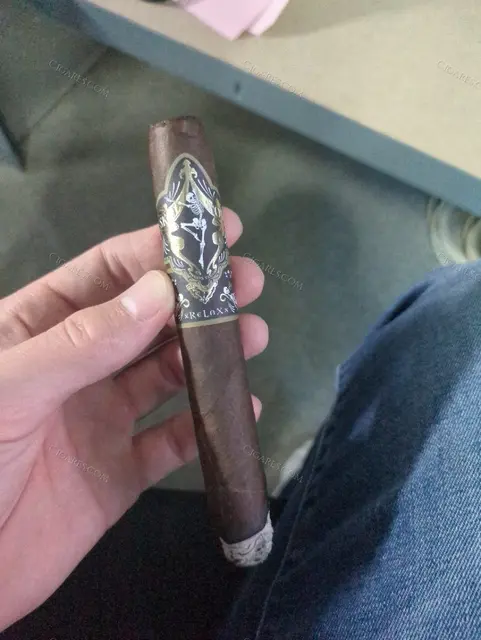 81
Skelton Xrelaxx Toro
“1 er tiers un peu plat puis s'affirme très bon goût toujours avec un petit café qui se marie très bien avec”
by Julien74 ·
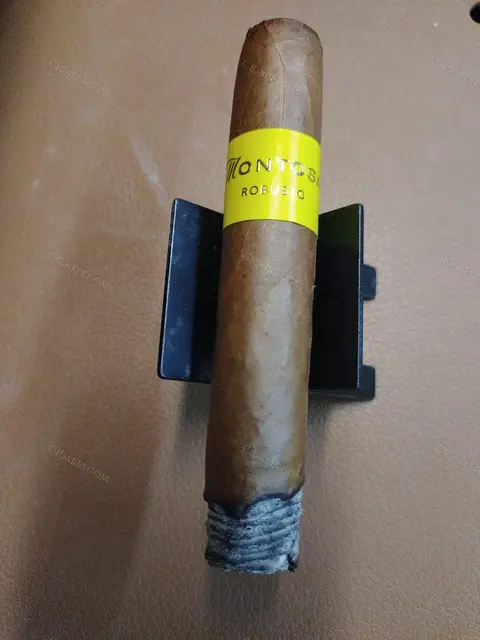 80
Montosa Amarillo Robusto
“Petit cigare agréable sans prétention mais qui fait le job largement pour le prix peut être conseillé pour un débutant .. Pour une pose avec un café crème parfait”
by Sprawlo ·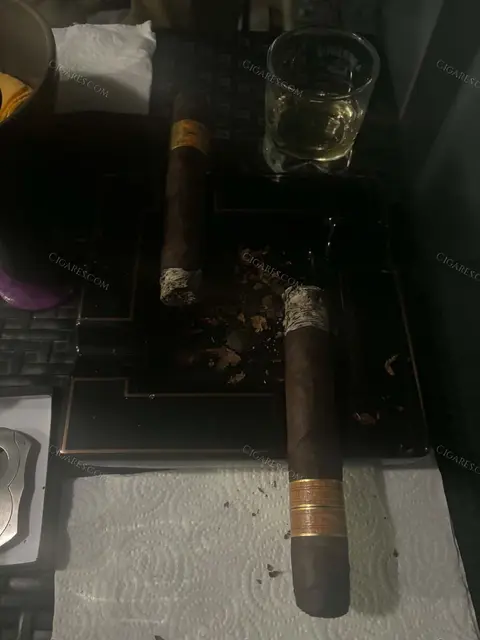 58
EPC INCH Natural No. 70 Churchill Gigante
“Un bon cigare si on cherche une longue dégustation (initialement jusqu'à 130 minutes prévues), nous avons déguster pendant près de 5h d'expérience avec ce calibre de cigare. Néanmoins le tirage reste difficile et dur et le volume de fumée n'est pas extraordinaire si l'on prend en compte le diamètre du calibre.”
by Angel14 ·
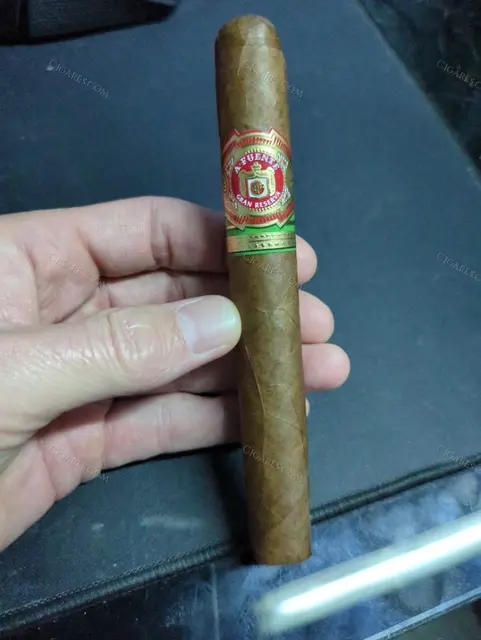 85
Arturo Fuente Hemingway Classic
“C'est un cigare que je fume régulièrement pour son rapport qualité prix il est excellent.”
by Julien74 ·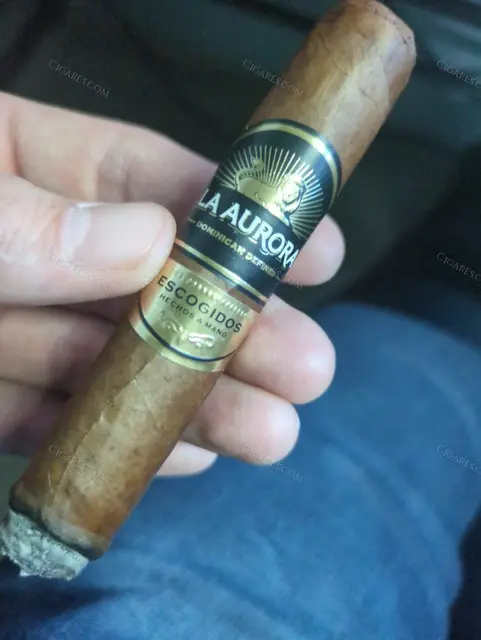 79
La Aurora Escogidos Robusto
“Fumé avec un café. Plutôt correct comme rapport qualité prix.”
by Julien74 ·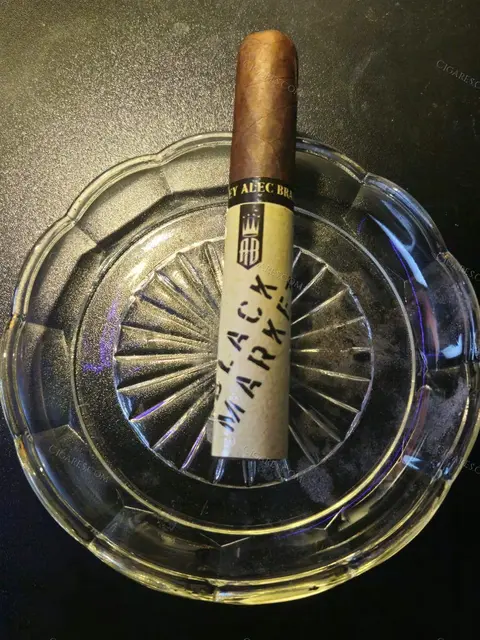 87
Alec Bradley Black Market Robusto
“Très bon cigare dans l'ensemble, manque seulement d'une touche de force.”
by Snusseur2Genie ·Cigar tasting FAQ
How long does a cigar tasting last?
Between 45 minutes and 2 hours depending on the vitola: a small corona takes about an hour, a churchill or a gran robusto often takes more than 90 minutes. Never rush it.
Should you inhale cigar smoke?
No. Cigar smoke is held in the mouth for a few seconds to perceive the aromas, then gently released. It is not inhaled like cigarette smoke.
How do you cut and light a cigar?
Cut the head cleanly, just above the shoulder, with a sharp cutter. Light with an odourless flame (cedar spill, butane lighter), toasting the foot before you draw.
How do you recognise a cigar's aromas?
By matching what you perceive to families: woody, spicy, roasted, fruity, floral, earthy, animal. Note them by third and compare with the aroma wheel in the notebook: with practice the vocabulary comes naturally.
What is the difference between strength and intensity?
Strength is the physical effect of the tobacco, from very mild to full strength. Aromatic intensity is how expressive the aromas are. A cigar can be mild and very expressive, or strong but closed.
Is the PDF tasting notebook free?
Yes. It contains the six-step guide, the aroma wheel and four blank tasting sheets to print as often as you like, for personal use. You can also fill in your note online and publish it.