
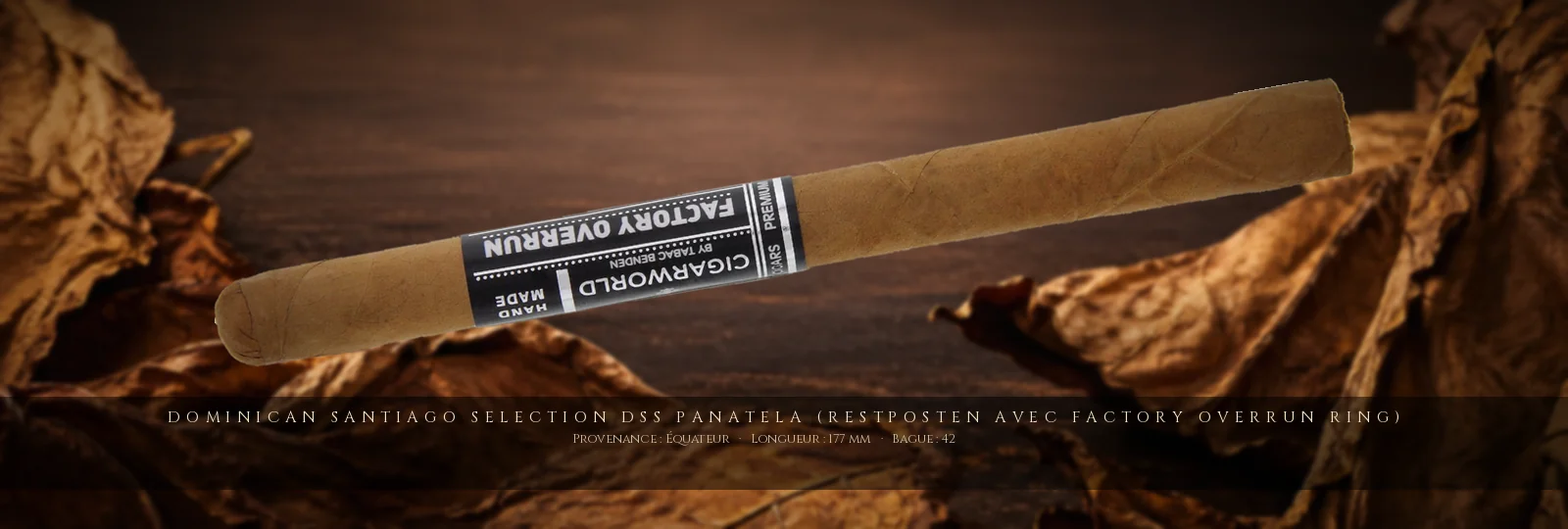
Dominican Republic · Lancero
3.5 – 5.5 €
3 – 5.5 CHF
Ratings & reviews
Editorial score
Community score
Be the first
Organoleptic profile
Strength
mild
Balance
poor
Draw
tight
Intensity
subtle
- Bouquet
- simple
- Finish
- medium
- Ash color
- gray
- Smoke output
- light
Aroma profile
Dominant aromas
Secondary aromas
Similar cigars
Based on strength, aromas, format and wrapper origin — for a comparable tasting experience.
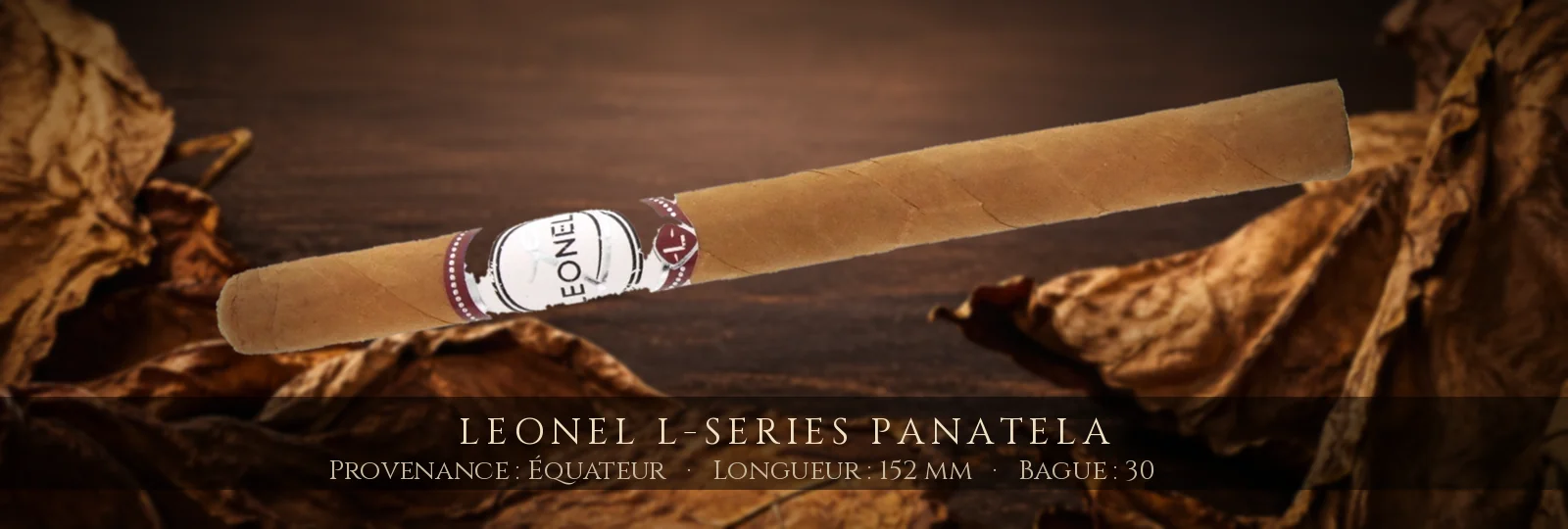 81% match
Leonel
Leonel L-Series Panatela3.5 – 6 €
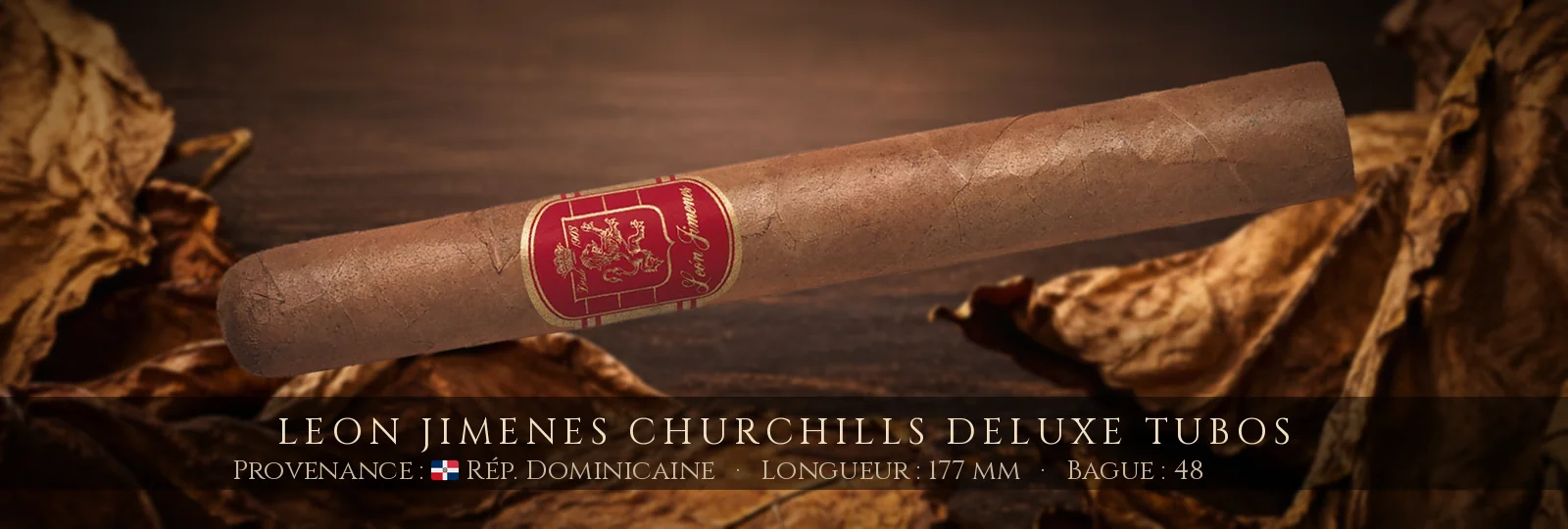 79% match
Leon Jimenes
Leon Jimenes Churchills Deluxe Tubos7.5 – 11.5 €
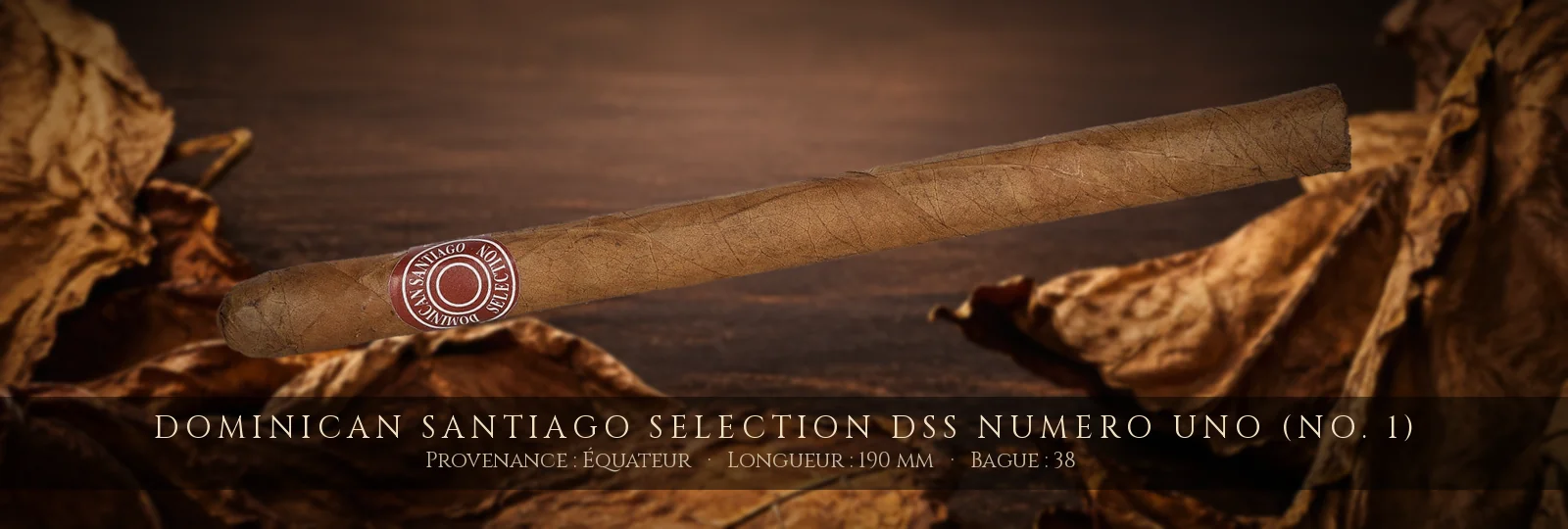 78% match
Dominican Santiago Selection
Dominican Santiago Selection DSS Numero Uno (No. 1)3.5 – 5.5 €
 78% match
Woermann Cigars
Woermann Cigars Dominican Bundles Corona3.5 – 5.5 €
Tasting notes
The Dominican Santiago Selection DSS Panatela impresses with its elegant Ecuadorian wrapper, distinguished by a silky texture and a slight sheen. Measuring 177.8 mm (7") in length and 16.7 mm (⅝") in diameter, this cigar immediately catches the eye with its polished appearance.
Upon lighting, the first olfactory contact reveals modest pre-light aromas, dominated by notes of wood, cocoa, and a subtle hint of hazelnut. This initial evolution suggests a straightforward yet promising tasting experience. However, once in the mouth, the draw becomes somewhat difficult, compromising the overall experience for the smoker.
As it progresses through the thirds, the development of flavors is rather gentle, where the dominant aromas are enhanced by secondary notes of vanilla and sweet spices. The balance between sweetness and strength remains mixed, leaving an impression of mediocrity in aromatic complexity and flavor coherence.
The finish presents a persistent sensation, with a dry texture and a slight bitterness that lingers in the mouth. The length is moderate, and it concludes on a note that may lack character according to the expectations of aficionados who prefer richer cigars.
For a better experience, it might be interesting to enjoy this cigar at the end of the day, paired with a black tea or a light coffee to complement the discreet notes that emerge throughout the tasting.
Community impressions
Enthusiasts of this cigar note a difficult draw and limited complexity. While its pre-light aromas of wood and cocoa are pleasant, the overall balance seems to fall short of expectations, which may disappoint some smokers.
How to taste: Dominican Santiago Selection DSS Panatela (Restposten avec Factory Overrun Ring)
▼
1.The Visual Examination
The appearance of the wrapper of the Dominican Santiago Selection DSS Panatela reveals a natural, light brown to golden hue, with a silky texture to the touch. However, the construction is deemed poor, which may influence the consumption of the cigar.
This initial inspection is crucial to anticipate potential issues during tasting — poor construction can lead to draw difficulties and uneven burn.
2.Pre-Light Aromatics
Before lighting, the pre-light aromas emanating from the Dominican Santiago Selection DSS Panatela present notes of wood, chocolate, and hazelnut, enriched by hints of vanilla and sweet spices. These scents herald an intriguing aromatic profile.
This step allows one to familiarize themselves with the cigar's aromatic profile before combustion — it helps prepare the palate and enhances the appreciation of the changes that will occur during tasting.
3.The Cut
The cut is made under the cap using a standard method, allowing for an easy draw. It is essential to ensure that the cut is clean to preserve the quality of the experience.
A clean cut is crucial for a consistent draw — an improper cut could limit access to the aromas and detract from the tasting experience.
4.Cold Draw
The cold draw of the Dominican Santiago Selection DSS Panatela proves difficult, which may raise concerns about the passage of smoke during tasting.
This step prevents potential discomfort during lighting — a difficult draw could indicate a defective internal construction that will impair the smoking experience.
5.Lighting
During lighting, it is important to ensure that the foot is evenly toasted to promote adequate burn. This prepares the cigar to release its aromas without alteration.
Paying particular attention to lighting prevents canoeing issues that may arise — uneven burn could require corrections during tasting.
6.First Third
From the first third, the strength of the Dominican Santiago Selection DSS Panatela reveals itself to be mild, with a low volume of smoke. The dominant aromas of wood, chocolate, and hazelnut are clearly present.
Recognizing this mildness at the beginning helps establish a reference point for the evolution of flavors — a less intense strength may allow for a more attentive exploration of the aromas.
7.Second Third
During the second third, secondary aromas of vanilla and sweet spices begin to emerge, although the overall balance remains mediocre. The aromatic richness may not be as developed as hoped.
This phase of evolution is essential for identifying additional nuances in the blend — a weak balance could detract from the expected complexity of the experience.
8.The Finish
The color of the ash is gray, indicating a certain lightness in the burn. The finish is characterized by a persistence with a slight bitterness and a dry texture.
Observing the color of the ash and the finish provides insight into the quality of the tobacco and how it has been prepared — a complex finish can reflect the mastery of the blend and drying process.
Community tasting notes
Have you smoked this cigar?
Be the first to share your tasting. Your review helps thousands of enthusiasts make the right choice.
✍️ Write a tasting note