
Ratings & reviews
Editorial score
Community score
Be the first
Organoleptic profile
Strength
medium
Balance
very good
Draw
perfect
Intensity
expressive
- Bouquet
- complex
- Finish
- medium
- Ash color
- light gray
- Smoke output
- abundant
Aroma profile
Dominant aromas
Secondary aromas
Similar cigars
Based on strength, aromas, format and wrapper origin — for a comparable tasting experience.
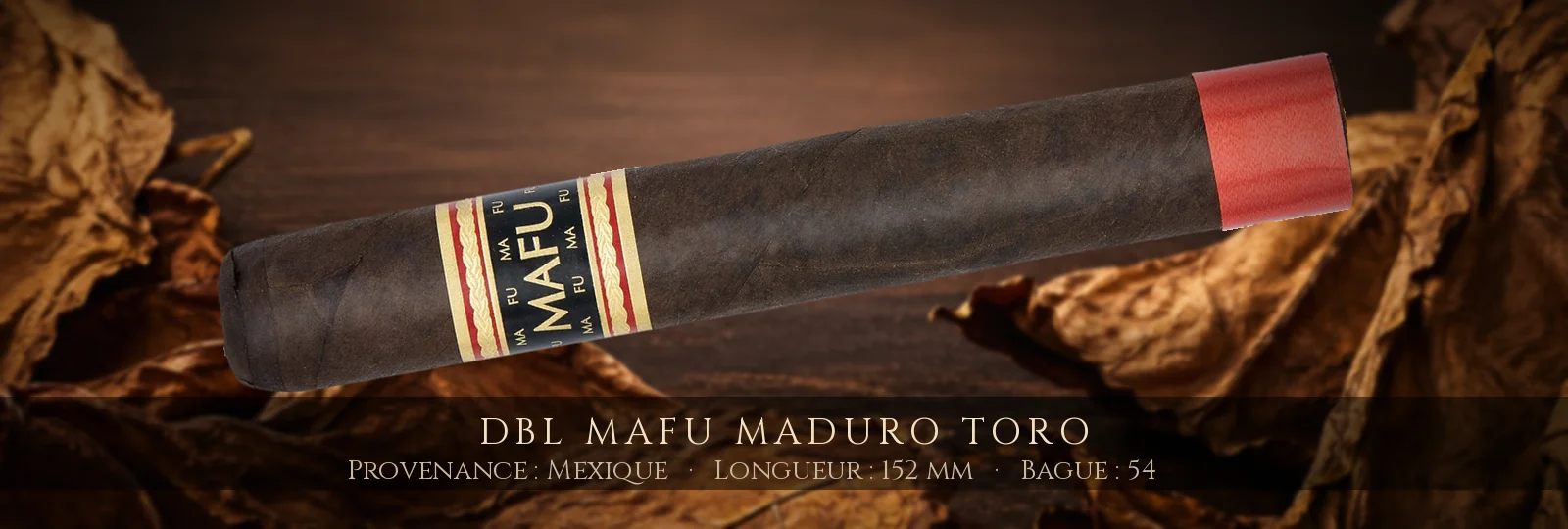 84% match
DBL
DBL Mafu Maduro Toro9 – 15 €
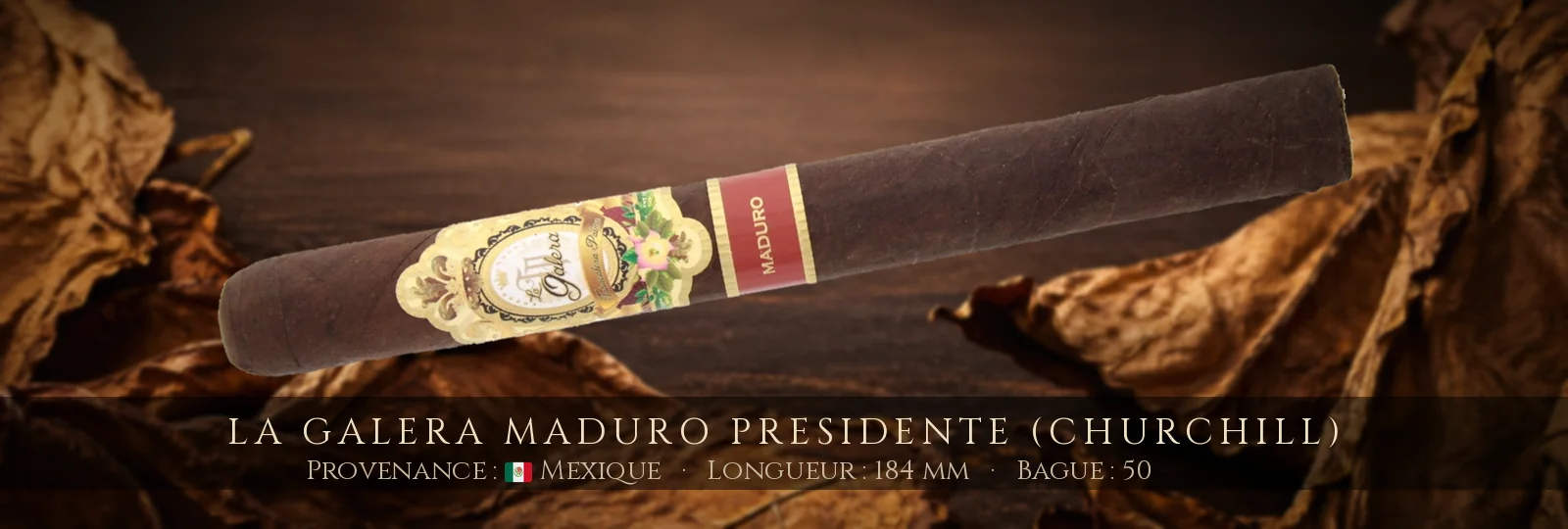 83% match
La Galera
La Galera Maduro Presidente (Churchill)7 – 10.5 €
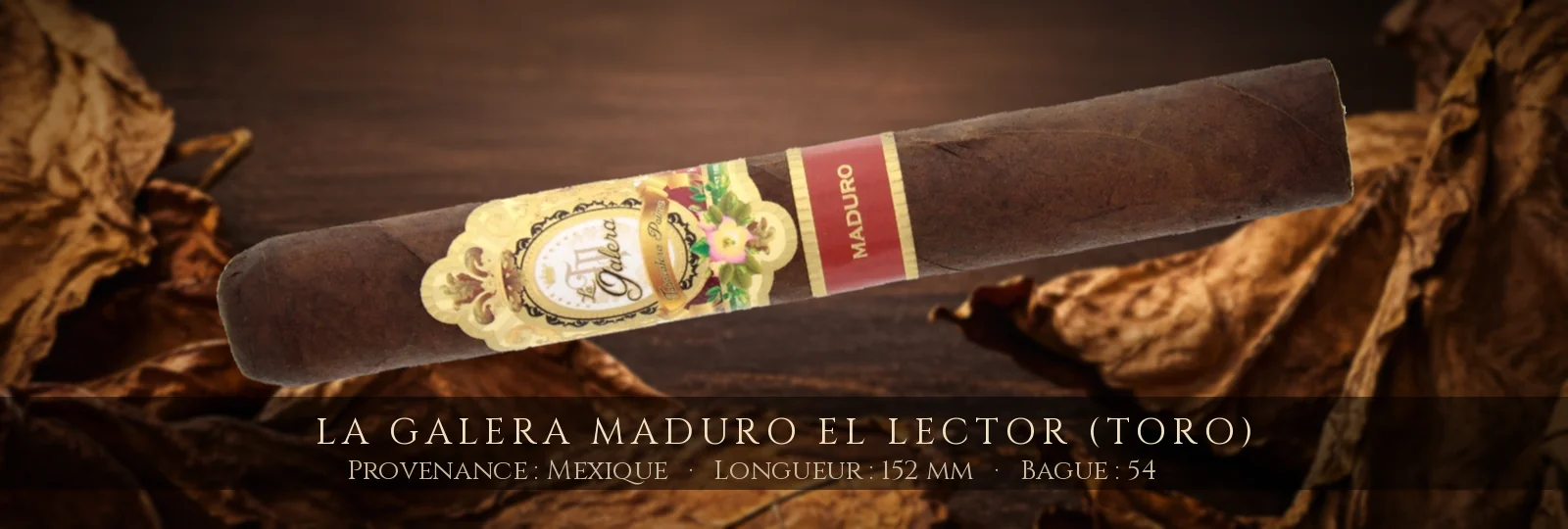 82% match
La Galera
La Galera Maduro El Lector (Toro)8 – 13 €
 82% match
Balmoral
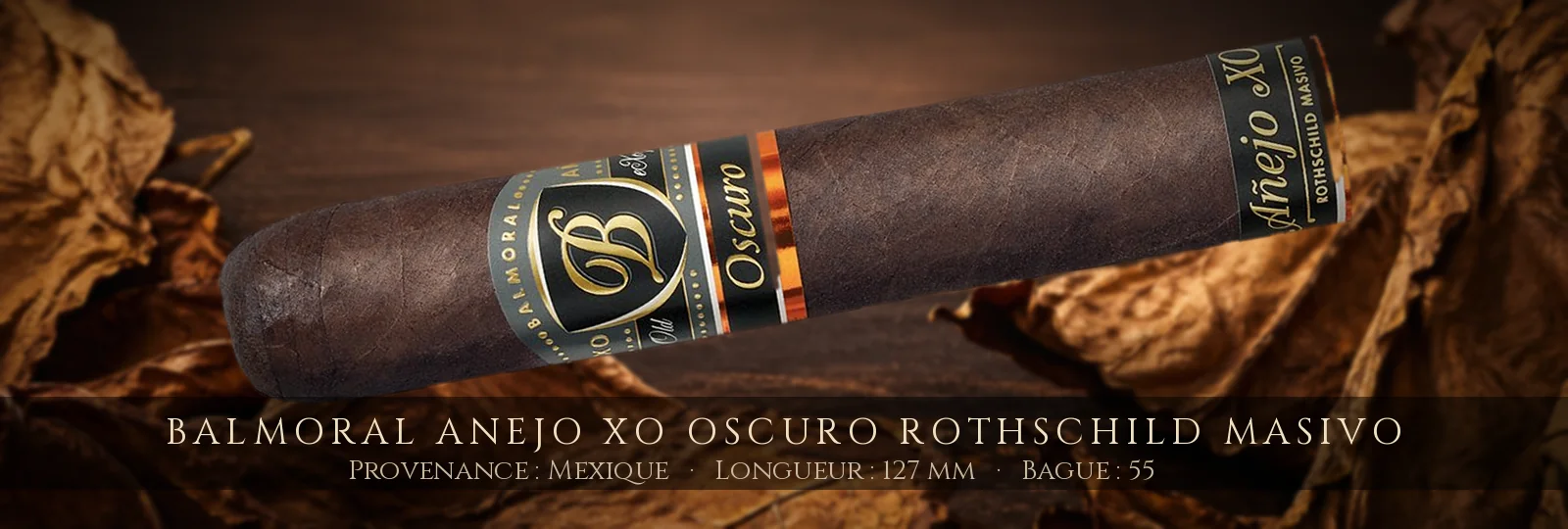
Balmoral Anejo XO Oscuro Rothschild Masivo8 – 12 €
Tasting notes
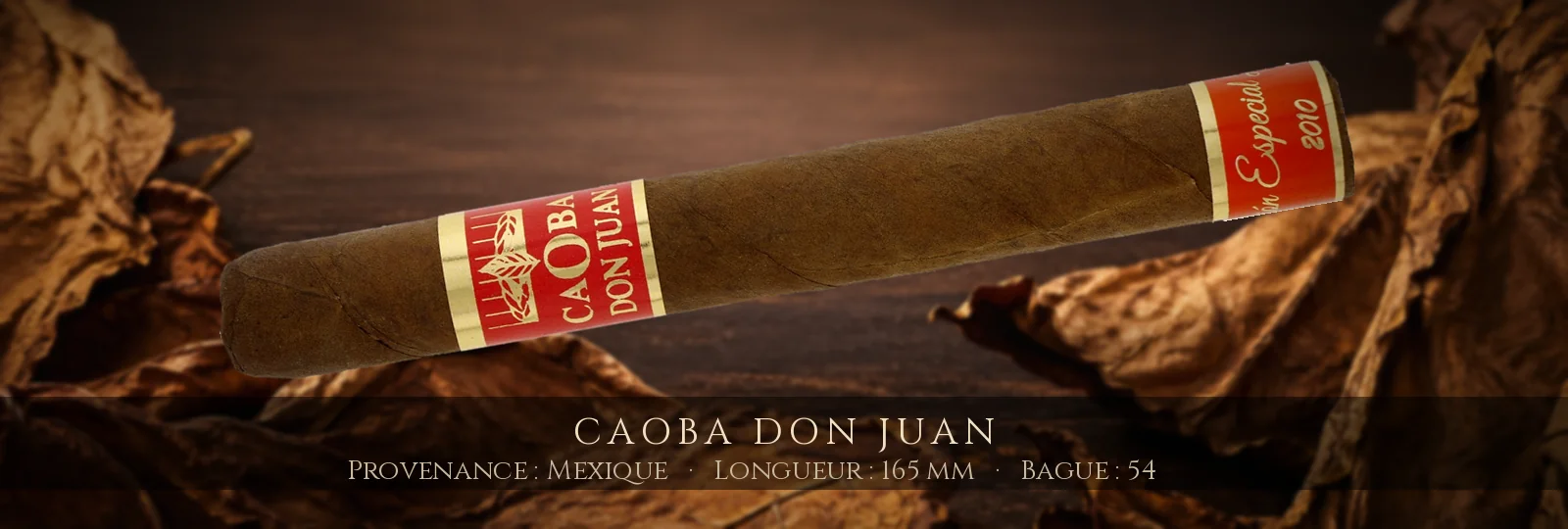
The Caoba Don Juan, a fascinating Mexican cigar, showcases a well-crafted wrapper. Its wrapper features a pleasant texture to the touch, with captivating reflections that hint at its carefully constructed contents. With impressive dimensions of 165.1 mm (6½") in length and a diameter of 21.4 mm (⅞"), its overall presentation is sure to catch the eye.
Upon lighting, the first olfactory contact is marked by coffee aromas that reveal themselves with beautiful intensity. During the tasting phase, pepper notes quickly emerge, followed by an evolution towards darker tones. With each puff, an atmosphere invites exploration of the different facets of the aromas, notably with a subtle presence of toasted bread.
On the palate, the cigar develops harmoniously, offering a captivating aromatic progression throughout the thirds. The flavors continuously evolve, where bitter chocolate and a creamy sensation add to the coffee aromas. This complexity is a testament to the artisanal craftsmanship of the Caoba, making each draw unique and exciting.
The finish enchants all the senses, with a slight bitterness that lingers, revealing a creamy texture in the mouth. The average length of the final sensation, combined with an exceptional balance between strength and sweetness, positions this cigar among the must-haves for premium cigar enthusiasts.
Ideal for a tasting session in the late afternoon, the Caoba Don Juan pairs perfectly with a strong black coffee, creating an unparalleled moment of gustatory escape.
Community impressions
Celebrated by enthusiasts, this cigar captivates with its rich aromatic profile, where coffee and bitter chocolate intertwine delicately. Its perfect draw and complex flavors make it an ideal companion for a relaxed break.
How to taste: Caoba Don Juan
▼
1.The Visual Examination
Upon observing the Caoba Don Juan, one notes its dark brown appearance, typical of a pronounced maduro wrapper. The construction is very beautiful, highlighting artisanal craftsmanship, and its dimensions of 165.1 mm (6½") and a ring gauge of 54 make it a straight cigar, pleasant to hold.
This initial visual approach provides clues about the quality of the tobacco used and the promise of a rich tasting experience, while awakening anticipation regarding the aromatic structure.
2.Pre-light Aromatics
Before lighting, the aromas of the Caoba Don Juan reveal notes of coffee and chocolate, accompanied by a hint of pepper. This aromatic bouquet is already evocative and suggests a beautiful complexity.
This step allows one to anticipate the flavors that will develop during the tasting, while familiarizing the palate with the nuances of the tobacco before heat alters these impressions.
3.The Cut
The standard straight cut is essential for optimal tasting. By cutting below the cap, one ensures an ideal opening for a harmonious smoking experience.
A precise cut promotes an easy draw, thus avoiding the inconveniences of irregular burn that could tarnish the tasting experience.
4.Cold Draw
The cold draw of the Caoba Don Juan proves perfect, offering a consistent and pleasant resistance during inhalation. This first contact with the cigar promises a smooth experience.
This preliminary test allows for the detection of any manufacturing defects, ensuring that one can expect abundant and surprise-free smoke upon lighting.
5.Lighting
During lighting, it is crucial to ensure that the foot is burned evenly. This helps establish a stable and controlled burn from the start.
A well-executed lighting prevents canoeing issues, thus ensuring that each draw meets the expectations set by the previously perceived aromas.
6.First Third
In this initial phase, the Caoba Don Juan unfolds its medium strength while offering dominant aromas of coffee, chocolate, and a generous volume of smoke. The experience is rich and enveloping.
This stage is crucial for establishing the tone of the tasting; it allows for the evaluation of the intensity and nuances that will develop thereafter.
7.Second Third
As the cigar progresses, secondary aromas such as toasted bread and creaminess begin to assert themselves, while maintaining a very good balance in the aromatic palette.
This evolution is critical, as it demonstrates the complexity of the blend and the craftsmanship behind the assembly, enriching the tasting experience.
8.The Finish
The color of the light gray ash and the finish reveal a slight bitterness complemented by a creamy texture. The finish is medium, leaving a subtle imprint.
These elements are indicators of the quality of the tobacco and the drying process, confirming the overall harmony of the cigar and its potential for future maturation.
Community tasting notes
Have you smoked this cigar?
Be the first to share your tasting. Your review helps thousands of enthusiasts make the right choice.
✍️ Write a tasting note