
Ratings & reviews
Editorial score
Community score
Be the first
Organoleptic profile
Strength
mild
Balance
very good
Draw
perfect
Intensity
expressive
- Bouquet
- complex
- Finish
- medium
- Ash color
- gray
- Smoke output
- medium
Aroma profile
Dominant aromas
Secondary aromas
Similar cigars
Based on strength, aromas, format and wrapper origin — for a comparable tasting experience.
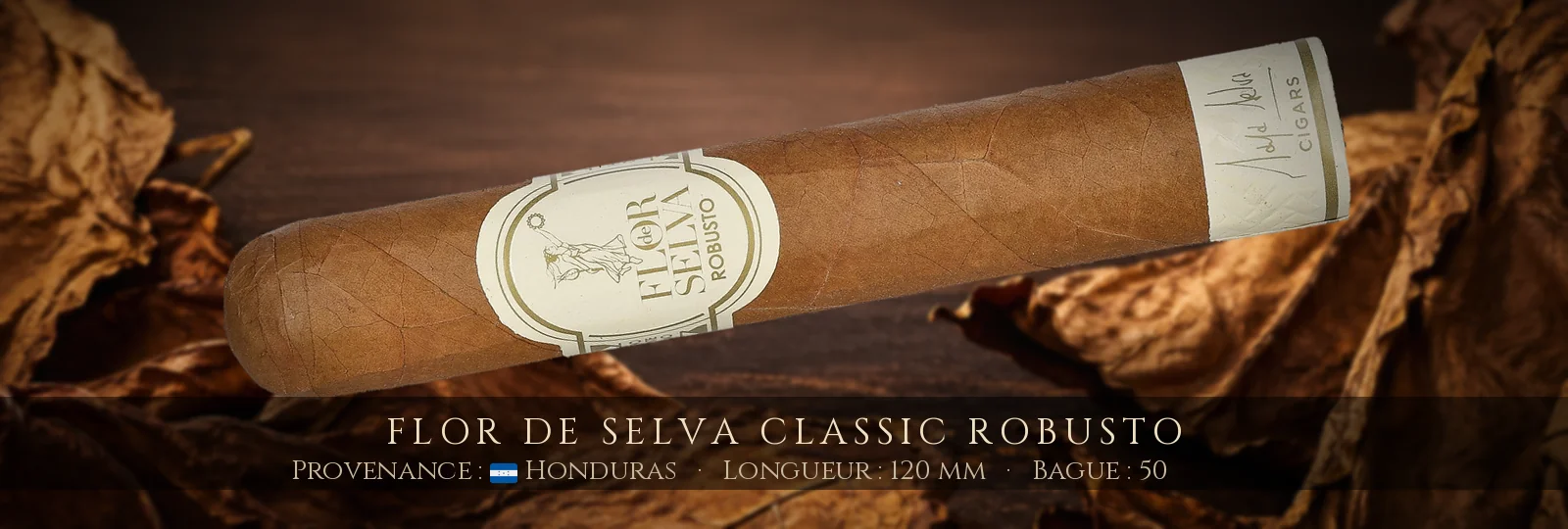 83% match
Flor de Selva
Flor de Selva Classic Robusto9 – 14 €
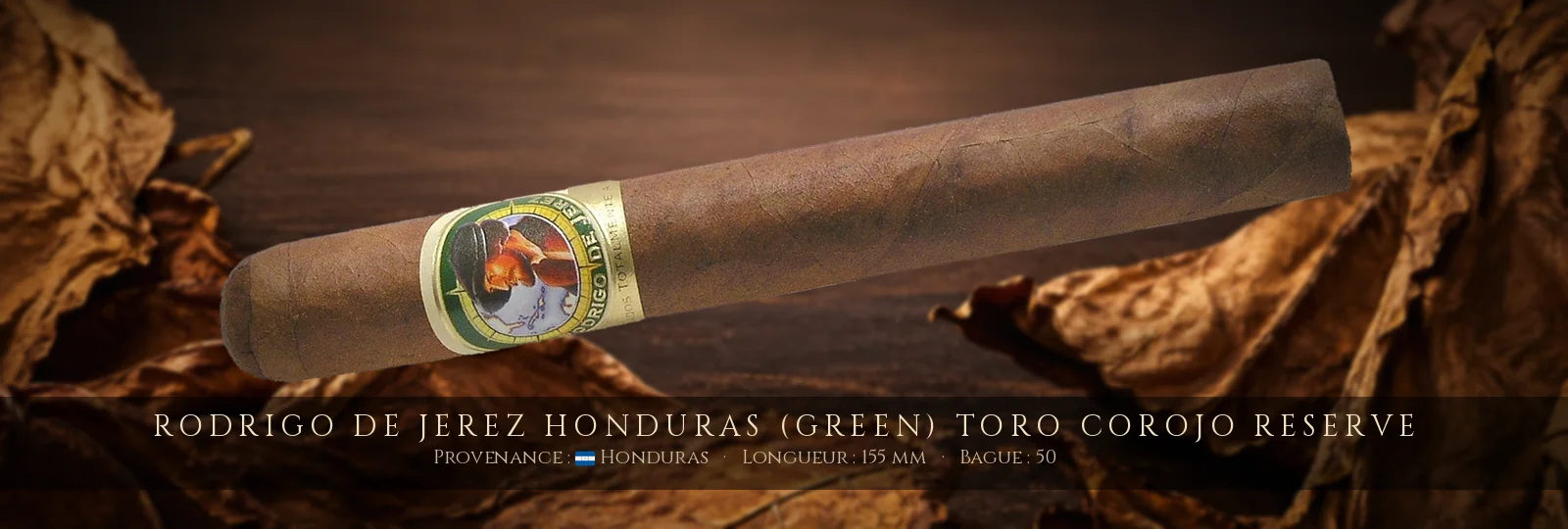 82% match
Rodrigo de Jerez
Rodrigo de Jerez Honduras (Green) Toro COROJO RESERVE6 – 9.5 €
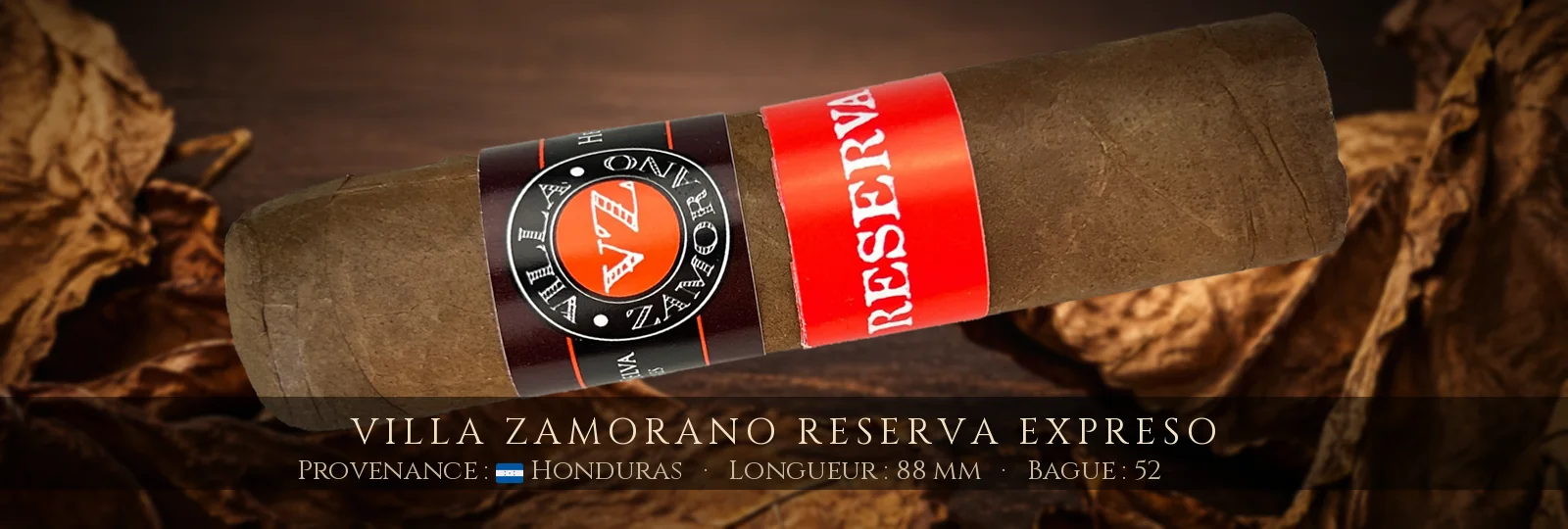 81% match
Villa Zamorano
Villa Zamorano Reserva Expreso3.5 – 6 €
 81% match
Macanudo
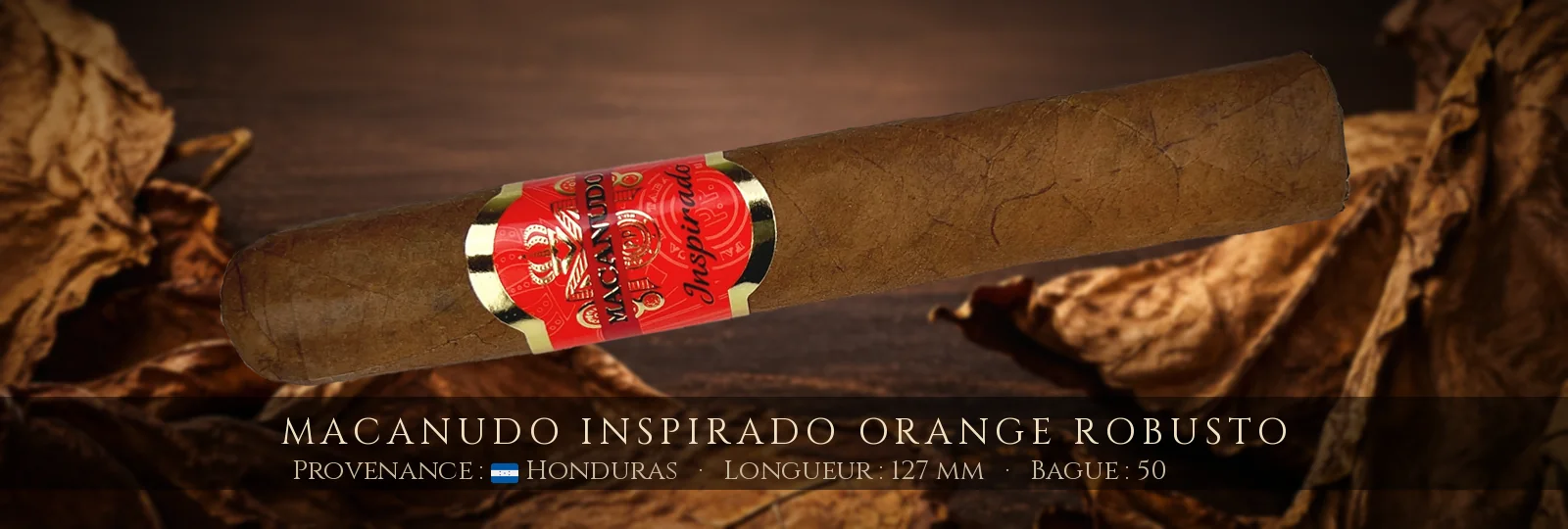
Macanudo Inspirado Orange Robusto5 – 8 €
Tasting notes
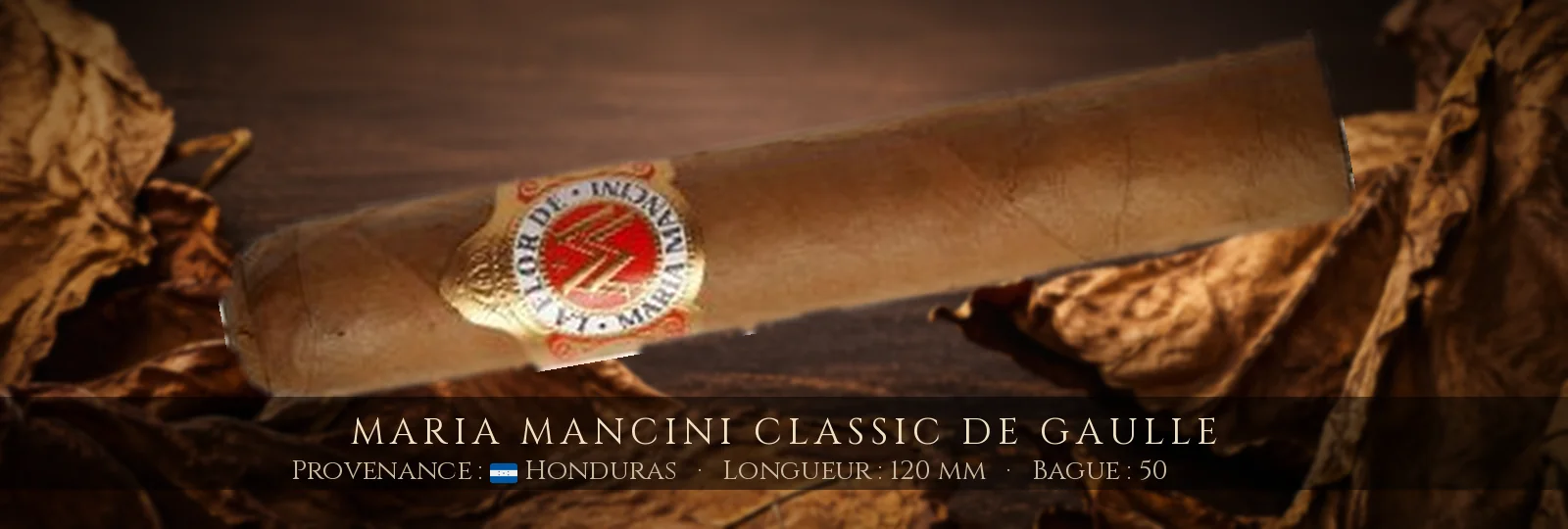
The Maria Mancini Classic De Gaulle, an iconic cigar from Honduras, presents itself with a smooth and slightly shiny wrapper, promising a seductive experience. Measuring 120.7 mm (4¾") in length and 19.8 mm (¾") in diameter, its appearance is both robust and elegant. The choice of Honduran tobacco gives it an appealing texture with a uniform wrapper, offering a pleasant grip.
Upon the first olfactory contact, this cigar reveals complex pre-light aromas with notes of cream, nuts, and a subtle hint of wood. Upon lighting, the aromatic richness intensifies, introducing nuances of vanilla and cocoa. The initial evolution confirms the quality of the craftsmanship, providing an easy draw and an abundance of smooth smoke.
On the palate, the Maria Mancini proves equally intriguing. The flavors develop harmoniously with each puff, beginning with a delicate sweetness and evolving into a richer depth, enriched by woody accents and a lightness nuanced by sweet notes. The consistency is impeccable, and the combination of flavors offers an expressive and engaging experience.
The final sensation on the palate is marked by a medium finish, where the persistence of the aromas creates a seductive balance between strength and a residual sweetness. This harmony makes this cigar a very attractive option for those seeking a non-heavy experience. This cigar stands out for its affordable price, making each moment of enjoyment particularly precious.
For an ideal moment, consider enjoying it in the mid-afternoon, accompanied by a glass of smooth whisky or freshly brewed coffee, to highlight the nuanced textures of this excellent cigar.
Community impressions
Enthusiasts of this cigar highlight its beautiful craftsmanship and complex aromas. Appreciated for its balance between sweetness and richness, it is often recommended for moments of relaxation, particularly in the afternoon. While some find its aromatic profile relatively light, others praise its ability to charm with finesse. An excellent option for those seeking a pleasant experience without excess.
How to taste: Maria Mancini Classic De Gaulle
▼
1.The Visual Examination
The Maria Mancini Classic De Gaulle presents a medium brown to earthy hue, reflecting the quality of its Honduran tobacco. Its beautiful construction ensures good integrity, while its straight format of 120.7 mm (4¾") with a ring gauge of 50 promises a pleasant smoking experience.
A meticulous observation of the cigar allows for an assessment of its overall quality — a beautiful appearance and careful construction are indicators of the aromatic richness to come.
2.Pre-light Aromas
Before lighting, the aromas escaping from the cigar evoke a seductive palette of cream, nuts, and wood. These notes foreshadow a rich and complex tasting experience.
Anticipating the pre-light aromas helps prepare the palate — this first step allows one to identify the flavors that will develop during the burn.
3.The Cut
Make a standard straight cut just below the cap to optimize the draw. The quality of the cut should be clean and precise, ensuring smooth access to the tobacco.
A well-executed cut is crucial for an easy draw — it prevents draw issues that could disrupt the tasting experience.
4.Cold Draw
The cold draw of the Maria Mancini Classic De Gaulle is perfect, allowing for free airflow through the cigar. This step ensures that the construction has no hidden flaws.
Testing the cold draw is an effective precaution to detect any potential issues before lighting — a well-balanced draw indicates a tasting experience without surprises.
5.Lighting
When lighting, be sure to evenly toast the foot of the cigar to ensure an even burn. This step prior to the actual tasting is essential to avoid any inconveniences.
A good lighting prevents the development of canoeing — this guarantees a smooth and symmetrical smoking experience from the start.
6.First Third
During the first third, the cigar reveals its sweetness, illustrated by dominant aromas of cream, nuts, and wood. The smoke volume is medium, allowing for good flavor exposure.
The first third is often indicative of the strength and intensity that the cigar has to offer — by savoring slowly, one allows the aromatic palette to fully unfold.
7.Second Third
At this stage, the cigar evolves towards secondary aromas, notably vanilla, peach, and chocolate, while maintaining a very good balance. The complexity of the blend begins to reveal itself.
Observing the evolution of aromas in the second third allows one to appreciate the richness of the blend — this stage is key to understanding the depth and complexity of the tasting experience.
8.The Finish
At the end of the journey, the gray ash testifies to the quality of the tobacco, while the finish offers a sweet residual accompanied by a slight bitterness and a pleasant salivation.
The color and consistency of the ash as well as the finish are valuable indicators of the cigar's minerality and balance — a good understanding of these elements concludes the tasting on an informed note.
Community tasting notes
Have you smoked this cigar?
Be the first to share your tasting. Your review helps thousands of enthusiasts make the right choice.
✍️ Write a tasting note